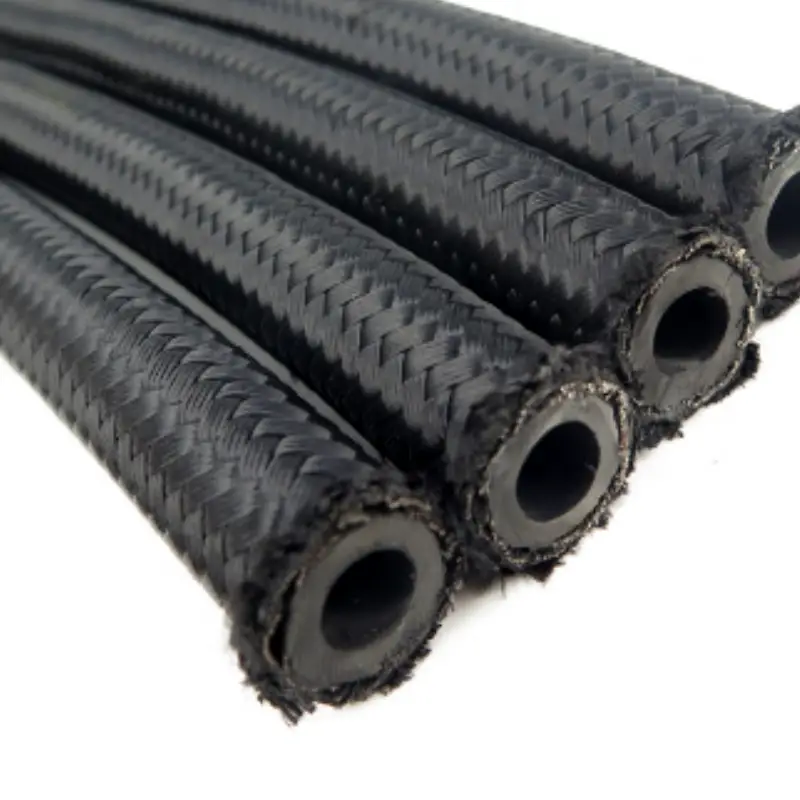
Choosing the correct hydraulic hose size depends on flow rate, working pressure, equipment design, hose length, and operating conditions. A common sizing mistake is selecting a hose only by pressure rating while ignoring fluid speed. For example, a 1/2-inch hose may work well for around 10–15 GPM systems, while a 1-inch hose is often required for applications above 30 GPM. The correct hose diameter helps maintain stable pressure, reduce heat generation, and improve equipment reliability.
Hydraulic hose size is mainly determined by the amount of hydraulic fluid moving through the system. The inner diameter controls how fast oil travels inside the hose. If oil moves too quickly, friction increases and creates additional heat. Many hydraulic engineers recommend keeping pressure line velocity around 15–25 feet per second and return line velocity around 5–10 feet per second.
For example, a construction machine operating at 25 GPM may require a larger hose than a smaller machine using only 8 GPM, even if both systems operate at similar pressure levels. A properly selected hydraulic rubber hose allows fluid to move efficiently between pumps, valves, cylinders, and motors.
Hose diameter selection should match the hydraulic flow requirement instead of simply choosing the largest available size.
Flow capacity changes significantly with hose diameter. A small increase in internal diameter can reduce resistance because the available flow area increases rapidly. A 3/8-inch hose has a much smaller flow area compared with a 3/4-inch hose, which is why larger equipment usually requires larger hose assemblies.
| Flow Rate | Common Hose Inner Diameter |
|---|---|
| Up to 5 GPM | 1/4 inch–3/8 inch |
| 5–15 GPM | 3/8 inch–1/2 inch |
| 15–25 GPM | 1/2 inch–3/4 inch |
| 25–40 GPM | 3/4 inch–1 inch |
| Above 40 GPM | 1 inch or larger |
The required size also depends on the equipment type. Compact machines often use smaller hoses because their hydraulic circuits operate with lower flow demand. Large excavators, wheel loaders, and industrial presses need larger hose diameters because their cylinders and motors require more fluid volume.
A 2023 hydraulic equipment study comparing different hose sizes under similar operating conditions found that reducing hose diameter increased pressure loss and fluid temperature. Systems with restricted hose sizing showed temperature increases of approximately 10%–20% during continuous operation.
Construction equipment usually uses hose sizes from 3/8 inch to 1 inch, while heavy industrial systems may use hoses above 1 inch. Agricultural equipment often uses medium-size hoses because hydraulic requirements vary between steering systems, loaders, and attachments.
Pressure rating must match the hydraulic system specifications. Hydraulic hoses are classified under standards such as SAE J517, which covers common hose types including SAE 100R1, SAE 100R2, SAE 100R12, and SAE 100R13.
A hose rated below the system pressure can fail during pressure spikes. Many hydraulic systems experience temporary pressure increases during cylinder movement or sudden load changes. For this reason, manufacturers often select hoses with working pressures higher than normal operating pressure.
| Hose Type | Typical Working Pressure Range |
|---|---|
| SAE 100R1 | Around 1,000–3,000 psi |
| SAE 100R2 | Around 2,750–6,000 psi |
| SAE 100R12 | Around 4,000 psi |
| SAE 100R13 | Up to 5,000+ psi |
The relationship between pressure and hose size requires careful matching. A larger hose does not automatically provide better performance if the hydraulic pump and components are designed for a smaller flow rate. Oversized hoses may increase installation space requirements and equipment weight.
Temperature conditions also affect hydraulic hose selection. Hydraulic oil temperature can exceed 180°F in demanding applications, and continuous exposure to high temperatures can shorten hose service life. Hose materials must be selected according to the working environment.
For example, equipment operating outdoors in cold regions may require hoses that remain flexible below freezing temperatures, while industrial machinery operating near heat sources may require hoses with higher temperature resistance. SAE specifications often define temperature ranges for different hose constructions.
Hose length and routing also influence size selection. Longer hoses create more friction because hydraulic fluid travels through a greater distance. A 30-foot hose assembly can produce higher pressure loss than a 10-foot assembly with the same diameter and flow rate.
Proper routing helps maintain hose performance. Hydraulic hoses should avoid sharp bends, twisting, and contact with moving parts. A hose installed below its recommended bend radius can experience reinforcement damage and reduced service life.
Common installation checks include:
-
Confirm the hose inner diameter matches system flow requirements.
-
Verify the working pressure exceeds the equipment rating.
-
Measure the required length before ordering.
-
Check fitting size and connection type.
-
Confirm temperature and environmental requirements.
Hose identification numbers also help technicians select replacements. Hydraulic hose sizes commonly use dash numbers based on internal diameter.
| Dash Size | Approximate Inside Diameter |
|---|---|
| -04 | 1/4 inch |
| -06 | 3/8 inch |
| -08 | 1/2 inch |
| -10 | 5/8 inch |
| -12 | 3/4 inch |
| -16 | 1 inch |
A machine using an incorrect hose size may show symptoms such as slower cylinder movement, excessive heat, pressure loss, or premature hose wear. In a 2019 industrial maintenance survey involving more than 200 hydraulic systems, incorrect hose selection and installation issues were among the common reasons for hydraulic service problems.
The replacement process should include checking the original hose specifications rather than measuring only the outside diameter. Two hoses with similar external dimensions may have different internal diameters, pressure ratings, and reinforcement structures.
The hose must match the hydraulic circuit, not only the physical connection point.
Selecting the correct hydraulic hose size requires reviewing flow, pressure, temperature, length, and equipment requirements together. A 1/2-inch hose may be suitable for one machine but insufficient for another machine with higher flow demand. Checking manufacturer recommendations and SAE specifications helps maintain safe and consistent hydraulic operation.
For most equipment applications, the right hose size provides balanced fluid movement, stable pressure performance, and longer service intervals. Proper sizing from the beginning can reduce maintenance frequency and keep hydraulic systems working efficiently over extended operating periods.